
Embedded Systems Testing Services
Test Embedded Products in Real Conditions With Our Remote HIL/SIL Lab
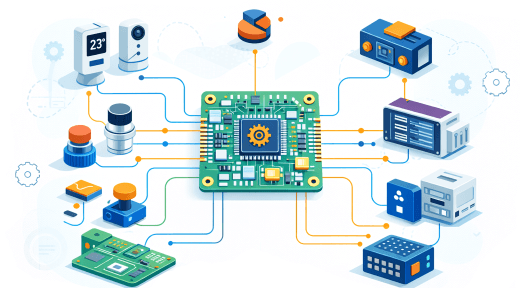
Validate firmware, protocols, and app-connected flows on real embedded hardware without shipping devices or building your own lab.
24+
years of experience in software testing
4000+
successful projects completed
500+
real testing devices
250+
QA engineers (Junior, Middle, Senior)
Our Testing Solutions for Embedded Devices
To ensure your microcontrollers reach the market in top quality, we perform the following types of testing:
Functional testing
- Validation of device hardware components (e.g., sensors, actuators) for correct operation in response to inputs.
- Testing embedded logic behaviors (e.g., state transitions, event handling) under normal and boundary conditions.
Performance testing
- Measurement of firmware execution times for critical operations (e.g., sensor polling, command processing).
- End-to-end latency benchmarks between device, app, and cloud under varying network conditions.
Integration & regression testing
- Verification of seamless data flow and interactions between device, mobile app, and сloud Integration.
- Regression checks for existing functionalities after updates to any component (firmware, app, or backend).
Security & data integrity testing
- Validation of API authentication, authorization, and encryption for secure data exchange.
- Testing network connections for integrity (e.g., TLS validation, tamper detection in transit data).
Connectivity testing
- Testing connection stability and handover between Bluetooth and Wi-Fi protocols.
- Validation of signal strength, range, and interference scenarios for reliable connectivity.
Firmware integrity validation
- Automated checks for firmware checksums and hashes pre- and post-OTA to detect corruption.
- Verification of signature validation during update installation.
Protocol testing
- Verification of message publishing/subscribing and error handling in MQTT and CoAP protocols.
- Сomprehensive LoRa/LoRaWAN testing
- Testing request-response cycles, persistence, and real-time updates in REST and WebSocket communications.
UX / usability testing
- Evaluation of user flows for onboarding (e.g., device setup, app pairing) for intuitiveness and error handling.
- Usability checks for in-app interactions, notifications, and recovery from common user errors.
Automation of physical interactions
- Automated scripts for Bluetooth pairing sequences, including discovery, bonding, and error recovery.
- End-to-end automation of OTA update processes, from initiation to verification of successful firmware deployment.
End-to-End IoT validation
- Comprehensive scenarios tracing data from firmware sensors through app processing to cloud storage and analytics.
- Validation of full system synchronization and consistency across all layers.
Reliability & stress testing
- Simulation of repeated power cycles to ensure device recovery and state preservation.
- Stress scenarios for network reconnects and OTA updates during high-load conditions (e.g., concurrent data streaming).
Consumer IoT validation
- Testing device pairing and reconnection in real-world consumer scenarios (e.g., multi-device environments).
- Regression and manual exploratory checks for everyday use cases like app backgrounding or network switches.
Why Choose QATestLab
The main challenges that arise while preparing your IoT solution for real-life applications
Cloud-Based HIL/SIL Lab
We handle the complete HIL/SIL testing cycle: from deploying a cloud-based environment and designing scenarios to executing tests and analyzing the results. In the end, you receive a fully validated product with complete supporting documentation, without investing in your own testing lab or shipping any hardware.
Effortless Scaling with Remote Testing Team
Our experts design a flexible testing ecosystem tailored to your product that is ready to scale from the very first Proof of Concept. This enables faster setup and effortless expansion across real devices, environments, and expert engineering support as your project grows.
Real-World Validation Across All Environments
You get testing in controlled radio environments with simulated network instability and interactions across a wide range of real mobile devices. This ensures your product performs reliably under real-world conditions and delivers a flawless user experience.
63% Scalable Infrastructure from PoC
You get a testing environment that’s 63% ready to scale from the first Proof of Concept, enabling faster setup and effortless expansion as your project grows.
Full Transparency with Clear Reporting
You get complete visibility into every test with clear documentation and structured testing deliverables. This transparency lets you track progress, validate results, and make data-driven decisions with confidence.
Early Defect Detection for Reduced Redesign Costs
You get early-stage device firmware QA across critical layers – from firmware logic to cloud interactions – allowing you to catch defects before release and avoid costly redesigns and delays.
Our Process
Our process is built for clarity, speed, and scalability — from the Discovery Phase to full-cycle QA execution.
Request Evaluation / PoC
(Free Discovery Phase)We start with a free assessment to clarify your QA requirements and to define testing scope, goals, and infrastructure needs.
NDA Signing
We ensure the confidentiality of your project data.
Access & Details
You provide technical access, documentation, and device details.
Initial Setup
We configure or assemble a tailored test bench for your hardware and environment.
Test Planning
Together, we align testing criteria, priorities, and success metrics.
QA Automation & Execution
Our engineers run manual and automated tests to validate the product’s functional, integration, and performance aspects.
Reporting & Insights
You receive transparent reports with detected issues, recommendations, and improvement cases.
Scaling Up
As your product grows, testing expands seamlessly, enabled by us acting as your Remote Test Hub and managed infrastructure.
All-Round Embedded System Testing

Functional Features
We verify firmware stability, compatibility, and logic accuracy, identifying potential errors through data-driven validation and scenario-based testing.
Environment
We evaluate your system behavior in controlled and simulated environments using prototypes, hardware emulation, and custom test setups to replicate real device interactions before production.
Non-Functional Features
We test how your embedded system performs under real constraints — time limits, energy consumption, data throughput, and resource availability — ensuring reliable operation even in demanding conditions.
Get Your Free Discovery Phase
We provide a Free Discovery Phase – a service that turns your undefined QA needs into a clear, structured QA request with practical recommendations to guide your next steps toward sustainable product growth.
Technology & Tools

Automation: Python, Bash, CI/CD (Jenkins, GitHub Actions)
HIL/SIL frameworks
Protocols: BLE, MQTT, LoRa, CoAP, Zigbee
Cloud: AWS, Azure, GCP integration
Device pool: real devices on different OS
Data analysis: Grafana, custom dashboards
Test benches: custom, based on Arduino/ESP32, Raspberry Pi, commercial standards
Cases
Discover how we apply proven QA methodologies and comprehensive validation to help companies ensure the stability and quality of their embedded systems.
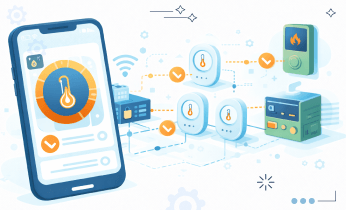
Testing a Smart Thermostat System
To help a smart thermostat system remain reliable in real-world conditions, QATestLab validated app-to-device connectivity, pairing stability, and data synchronization across devices, OS versions, and unstable networks.
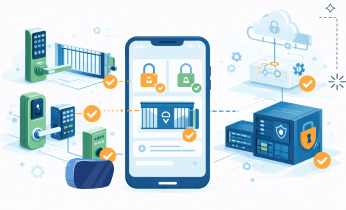
Quality Testing for Advanced Door Security System
To ensure a security platform delivers reliable control over doors and access hardware, QATestLab built QA processes from scratch and validated seamless software–hardware interaction across multiple environments.
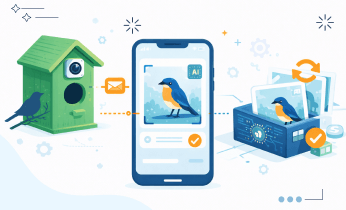
Testing a Smart Birdhouse System
To help a smart birdhouse solution deliver consistent performance, QATestLab tested the connected device and mobile app through functional, end-to-end, and regression testing, validating stable device–app interaction and a user-friendly experience before release.
Ensure your IoT and embedded hardware perform reliably under real operating conditions.
Share a few details in the form to define the right testing strategy aligned with your product priorities and long-term business objectives.

FAQ about Embedded Testing
How can a remote team test embedded systems?
Our QA engineers will build a Cloud-Based HIL/SIL Lab configured for your hardware’s operational behavior. Thanks to this, your device will be validated under realistic field conditions without physically shipping devices to testers, and you won’t need to invest in a physical lab.
What types of devices and technologies do you support?
We test the full IoT stack, from firmware to the cloud. Our hardware testing service covers:
- Microcontroller-based and embedded devices – firmware validation, OTA updates, power behavior, connectivity stability
- Connectivity protocols – Bluetooth/BLE, Wi-Fi, MQTT, CoAP, LoRa-based communication
- IoT and smart devices – used in consumer, commercial, and industrial environments
- Mobile integrations – real-device testing across a large pool of Android/iOS smartphones
- Cloud interactions – end-to-end validation of device-app-cloud workflows
We maintain a growing pool of 500+ real devices to ensure wide compatibility coverage and realistic testing conditions. If a project requires additional devices or configurations, we expand the device pool on demand.
What is HIL/SIL as-a-Service?
HIL/SIL as-a-Service is a way for you to test your IoT product using our ready-made lab instead of building your own.
- SIL (Software-in-the-Loop) – Your firmware or algorithms run in a virtual simulation, letting you validate logic early, safely, and without physical hardware.
- HIL (Hardware-in-the-Loop) – Your real device is connected to our automation rigs, where its behavior is tested under realistic conditions (network drops, power cycles, protocol interactions, etc.).
With this service, you get fully managed test execution, infrastructure, and reporting, while your team focuses on development – no lab setup, no maintenance, no extra overhead.
How much does it cost to start? Do you offer a pilot?
Pricing depends on your device type, test scope, and the level of infrastructure required. We offer a pay-as-you-go QA option (Time and Material business model) – a transparent, flexible pricing model that separates the one-time setup effort from regular test cycles, ensuring you always have a clear understanding of what you’re paying for.
Regarding the pilot: yes, we offer a Free Discovery Phase.
During this phase, we work together to clearly define your QA needs, align them with your business goals, and shape a tailored QA concept that supports your product’s growth. The final outcome is a PoC – a ready-to-use foundation your team can continue developing, either independently or in collaboration with us.
How involved does my team need to be?
Your involvement remains minimal, as the service is fully managed. Your team only provides device access, API details, and technical context. From there, our engineers manage the entire testing cycle, from planning and environment setup to execution, maintenance, and reporting, ensuring predictable operations with minimal load on your internal resources.
How do you ensure data security?
We protect your data through NDA-backed confidentiality, isolated and access-restricted test environments, encrypted communication channels, and secure credential handling. We never store production data, and all test artifacts follow your security requirements. Our processes align with GDPR and industry best practices to ensure your device, data, and documentation stay fully protected.
How do you ensure intellectual property protection?
We ensure the protection of your intellectual property throughout the entire testing engagement. All firmware, documentation, test artifacts, and results generated during testing remain your exclusive property.
Intellectual property protection is ensured through:
- NDA-backed confidentiality established prior to project initiation
- Controlled access to devices, test environments, and project documentation
- Dedicated and isolated testing environments assigned exclusively to your project
- Adherence to your internal security policies and confidentiality requirements throughout the QA process