Is your website designed for everyone? Perform an accessibility scan.

Free check-up

AI Testing Service

Managed QA to validate AI behavior within software systems.

ai testing banner
22+

years of software testing
experience

3000+

projects completed

250+

QA engineers across Junior, Middle, and Senior levels

500+

real testing devices 

When AI Testing Becomes Critical For Product Quality

AI output directly affects user decisions

Generated answers can influence how users understand information, complete tasks, or make choices. AI testing checks whether this output stays safe and useful in real scenarios.

ML models influence business workflows

Predictions and recommendations can shape operational decisions. Machine learning testing helps detect model behavior that can weaken workflow quality.

LLM behavior changes across real prompts

Users can ask the same thing in different ways. LLM testing helps reveal where responses lose clarity, context, or product alignment.

Released AI behavior keeps changing

Model updates, prompt changes, and new data can shift outcomes. Continuous testing helps teams keep AI behavior visible over time.

RAG systems need answer grounding

Software that uses internal knowledge sources needs answers built on the right content. RAG testing checks whether retrieval supports the intended result.

AI performance affects adoption

A useful AI result can lose value when response time feels unstable. Performance checks show how the system behaves under everyday workload.

AI enters regulated environments

AI used in sensitive domains needs structured validation evidence. Testing supports risk review, governance work, and compliance readiness.

AI Software Testing Services We Provide

We offer a comprehensive approach: a combination of traditional and AI-tailored testing.

Our team excels at validating AI-driven applications by addressing the unique challenges of NL, LLMs, and deep learning systems. We combine traditional QA practices with specialized AI-focused techniques to ensure models perform reliably and ethically in production.

Functional and Accuracy Testing

  • Quality Assessment: analysing the accuracy, logic, and hallucination rate of responses on standard and challenging prompts.
  • Behavioral Checks: verifying adherence to required output formats
  • Adversarial testing: prompt fuzzing, format breakers, multilingual, long context.

Pre-Deployment Model and Data Validation

  • Evaluations: creating automated tests on golden datasets to ensure a new model performs better than or equal to the one it's replacing.
  • Training Data Audits: preventing data leakage and verifying dataset balance and correctness before training.

RAG Testing

  • Retrieval Accuracy: measuring how precisely the system finds relevant information from its knowledge base.
  • Attribution & Faithfulness: verifying that every response cites its source and remains free of hallucinations.

Bias, Fairness, and Ethics Audits

  • Identifying Blind Spots: evaluating performance across demographic groups to uncover fairness gaps.
  • Toxicity & Harm Testing: confirmation that even disguised harmful or offensive content is blocked effectively.

Basic Security and Vulnerability Testing

  • Prompt-Based Attacks: checking resistance to jailbreaking, prompt injection, and data exposure attempts.
  • Tool Security: ensuring integrated tools can’t be exploited to access internal systems.

Continuous Evaluation and A/B Testing

  • Live Performance Comparison: measuring performance, user satisfaction, and cost across model versions.
  • Safe Deployment: rolling out new models gradually (Canary/Shadow deployments) to minimise risk and enable rapid rollbacks.

Performance and Cost Governance

  • Speed & Stability: testing response latency and system stability under high levels of concurrent requests.
  • Latency benchmarking: throughput measurement, and SLA verification under realistic prompt sizes and tool latencies.
  • Cost Control: validating token limits and cost controls, preventing unexpected and excessive API usage bills.
  • Tracing & Observability: end-to-end observability validation for LLM execution flow control (prompt, retrieval, token use).

Production Monitoring and Observability

  • Drift Detection: using built-in capabilities of observability platforms (e.g., LangfuseLangsmythPrometheus), tracking distribution shifts in live inputs to prevent performance degradation.
  • Automated Quality Assurance: collecting real-time metrics (accuracy, safety, latency, cost) from production traffic for proactive fixes.

How to Start with AI Testing

01

Reach Out

You fill out the form on this page and tell us about your AI-powered product and current quality concerns.

02

Meet to Discuss Your Needs

We hold a short online meeting to understand your product, AI feature, release stage, and testing priorities.

03

Sign an NDA

We sign an NDA before reviewing any sensitive information, including product documentation, prompts, datasets, or access details.

04

Grant Access

You provide access to the test environment, documentation, and target platforms so our engineers can scope the work around your setup.

05

Get Your Free Estimation

Our engineers assess the scope and prepare an estimate of effort, timeline, and team setup for AI testing.

06

Review the Estimation Together

We walk you through the estimate in a follow-up meeting and align the testing scope with your product goals.

07

Agree on Scope and Sign Off

Once you approve the scope, we sign the service agreement and confirm the start date.

08

Start Testing in 1-3 Days

Our engineers onboard the product and begin AI testing within 1–3 days after the agreement is signed and the required access is ready.

Let’s Make Your AI Product Ready for Real Users

Fill out the form, and we’ll prepare an AI testing approach scoped to your model, product flow, risks, and release timeline. 

This site is protected by reCAPTCHA and the Google Privacy Policy and Terms of Service apply.

Something went wrong, please try again

Cases

Testing an ERP System

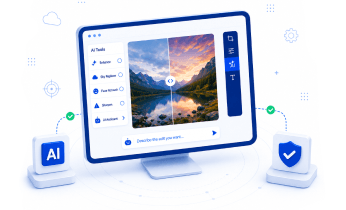
Testing a Desktop AI Photo Editor in 72 Hours

QATestLab validated 13 AI-driven editing features across a 55-device test pool on Windows and macOS, logged 18 bugs, and supported a stable release within 72 hours.

Read more

MOBILE GAMES

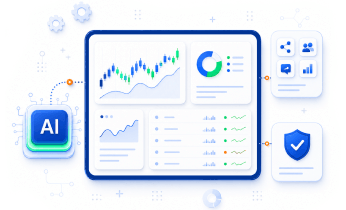
Optimizing QA for an AI-Powered Investing Platform

We tested data accuracy, platform stability, and social integrations across iOS and Android devices. In 10 days, the project uncovered 20 critical issues, reduced QA onboarding time by around 40%, and supported faster feature releases. 

Read more

Ensuring Seamless AR Experience Across a Large Pool

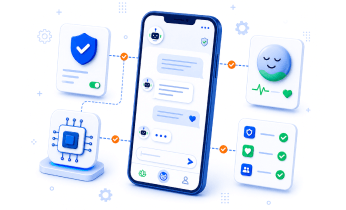
Testing Emotional Safety in Mobile AI

We tested an AI-powered mental health chatbot in sensitive user scenarios to identify risky responses and product issues. The project improved response safety and ensured stable performance across iOS and Android.

Read more

icon faq

FAQ

What is AI testing?
How to test LLM applications?
How to test RAG systems?
How is AI testing different from traditional software testing?
How much does AI testing cost?
When should QA join AI product development?
Can AI testing support EU AI Act, ISO/IEC 42001, and NIST AI RMF readiness?
Do you test AI products after release?